

History of Poker Origin and Inventor
The history of poker is that of a card game that has evolved since ancient times, to be the most played in the world. The great tournaments that are celebrated all over the planet can be seen on television and on the Internet.
The origin of poker is much older than it seems. Around 1000 AD a game called âs nas was being played in Persia. Whose fundamental sets were the pair, the three of a kind, a three of a kind + a pair (the full house) and four cards of the same number (the poker).
In addition, there was also the possibility of cheating the opponent through simulation or "bluff". Which was done with an impassive face so as not to discover the reality of the cards that were counted, hence the "putting on a poker face."
This game was widespread in the Middle East in the Middle Ages, from where the soldiers of the crusades imported it.
It is known that in the 15th century flusso was played in Italy, called at the same time in France brelán, both were stake games originated in the aforementioned Persian game and that the Arabs popularized.
Towards the first years of the 16th century, it was already played in Spain, Italy and France under the names of "first", first or first, respectively. Each player had three cards: the three of a kind was the most successful play, followed by the pair and the flus or three cards of the same suit.
At the end of the 17th century, the lantern began to be accepted as a possibility and an important part in the development of the game, as well as gambling, modifications that were all the rage in England and Germany from the year 1700.
In these countries the game was called pochen (bragging). In this way, the French developed another called poque, a game similar to bouillotte, which in 1803 they took to New Orleans, the capital of the then French colony of Louisiana.
English-speaking Americans took the game from this French modality, also adopting the term poker, which evidently has nothing to do with the English word poker = poker, as some have written saying that it was so called because among those who play it they poke and they urge, in a psychological sense, to take difficult initiatives, such as accepting a position, overcoming it or withdrawing.
Who Invented Poker?
In 1834, the American created the rules and regulations of today's poker. The same character baptized it as poker and considered it a game of gamblers or seating game.
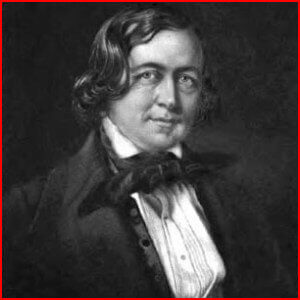
Jonathan H. Green, father of modern poker.
Poker was the American national game since 1850.
It was in the United States that the game of poker had its golden age. From the French colony of Louisiana he traveled up the Mississippi River during the first decades of the 19th century, and in his steamboats, between the luxury and glamor of a snobbish and somewhat canalized society, he gave rise to new forms of gambling, and poker was born modern with the game of brelan, in which it was possible to win or lose a lot of money in one night. From the second half of the 19th century, with the fondness shown by Queen Victoria of England for this game, poker, it enjoyed favor in English court circles and in countries related to the empire.
From the second half of the 19th century, with the fondness shown by Queen Victoria of England for this game, poker, it enjoyed favor in English court circles and in countries related to the empire.
Etymology of the word póker
As for the origin of the term, we must say that it is not possible to delimit it. Many adhere to the theory that it comes from the German pochspiel, a game in which those who passed or refused to follow the game did so by saying Ich poche.
Others prefer to trace its origin to a 19th century American slang term: poke = pocket, because cheaters kept an additional card in their pockets or sleeves to complete their game.
Add Comments
Give us your opinion is very important.